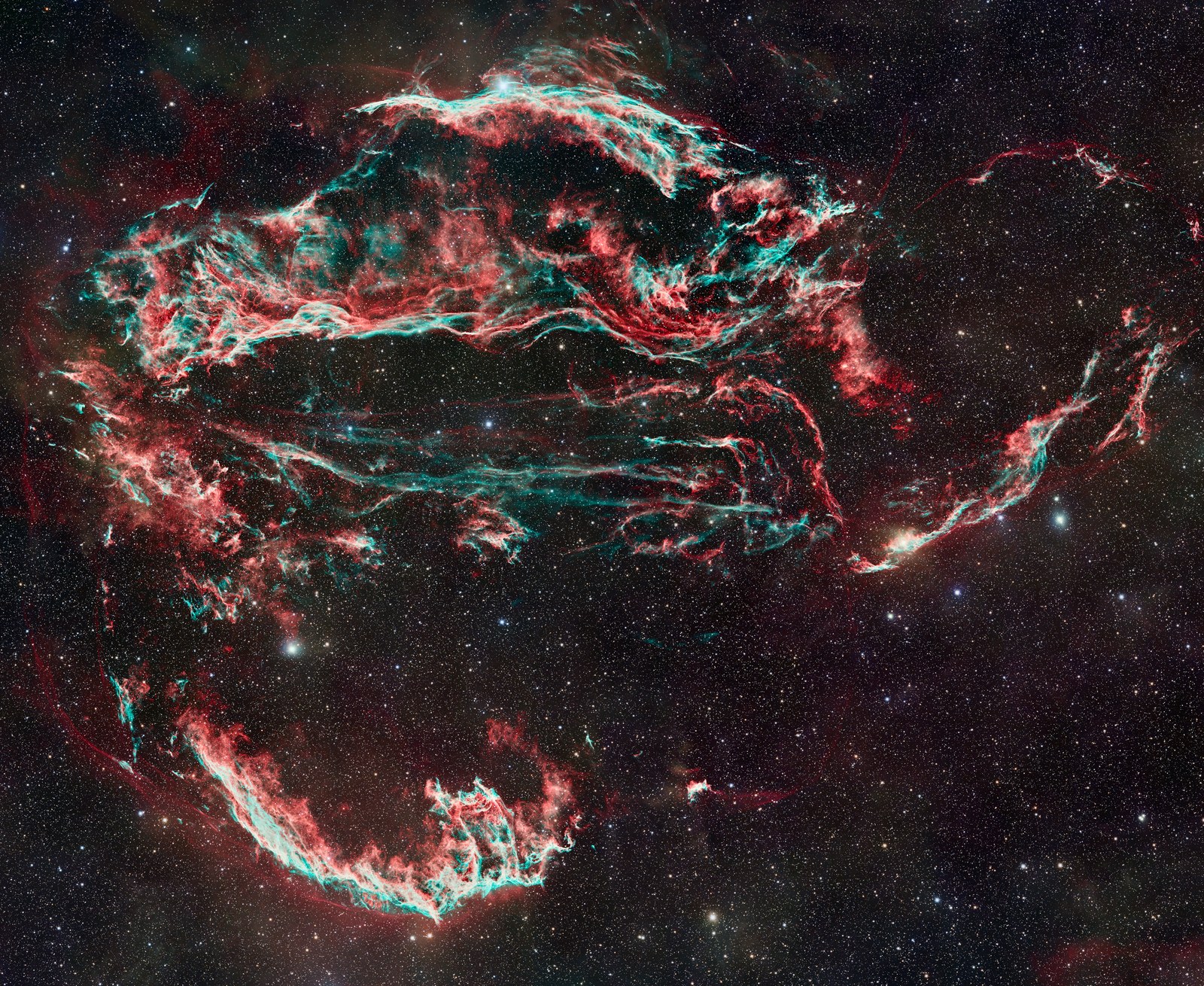
The Veil Nebula
Order a print From 189€
Or give this image as a gift
Gift idea · ArtBox Gift Edition
Open edition · gallery-quality print, ready to give. Wooden frame, matte finish, gift box. To hang or stand.
Finish : Matte
Description
These delicate threads, spread across the width of six full Moons, are the debris of a dead star. Between 10,000 and 20,000 years ago, a star some twenty times heavier than the Sun exploded. For a while, it shone brighter than Venus, visible in broad daylight.
What remains of it now drifts about 2,400 light-years away, in the constellation of Cygnus. The shock wave is still racing through space and sweeps up the gas it meets; heating it to extreme temperatures, it makes the gas glow and traces these lacy wisps, spread over nearly 120 light-years.
Each filament marks the passage of the shock wave. And the colours betray the matter itself: oxygen emits blue-green light, hydrogen red light, each with its own hue, like the gases in a neon sign.
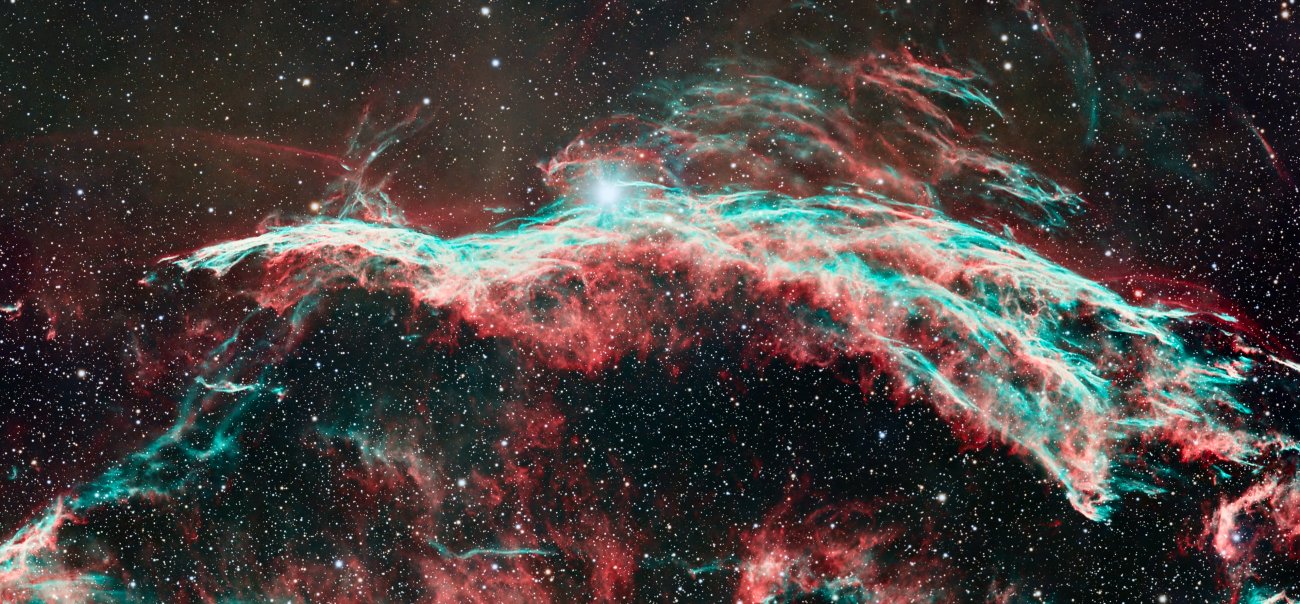
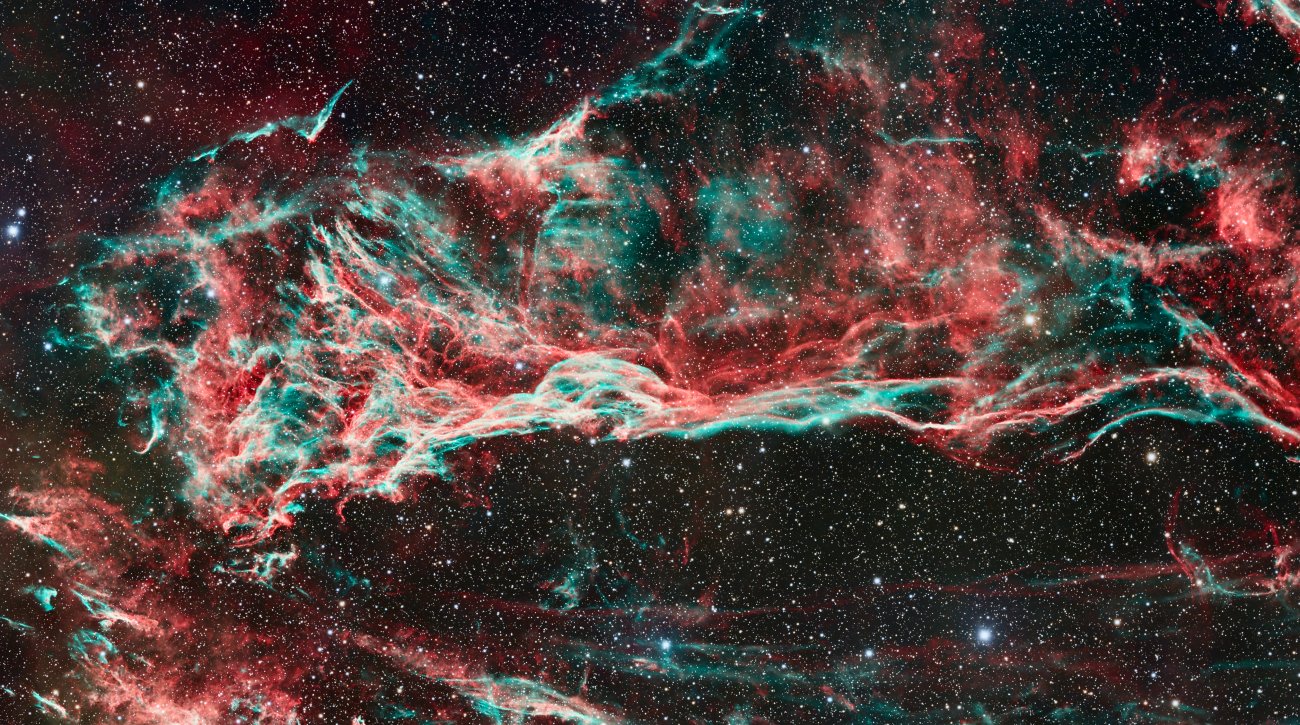
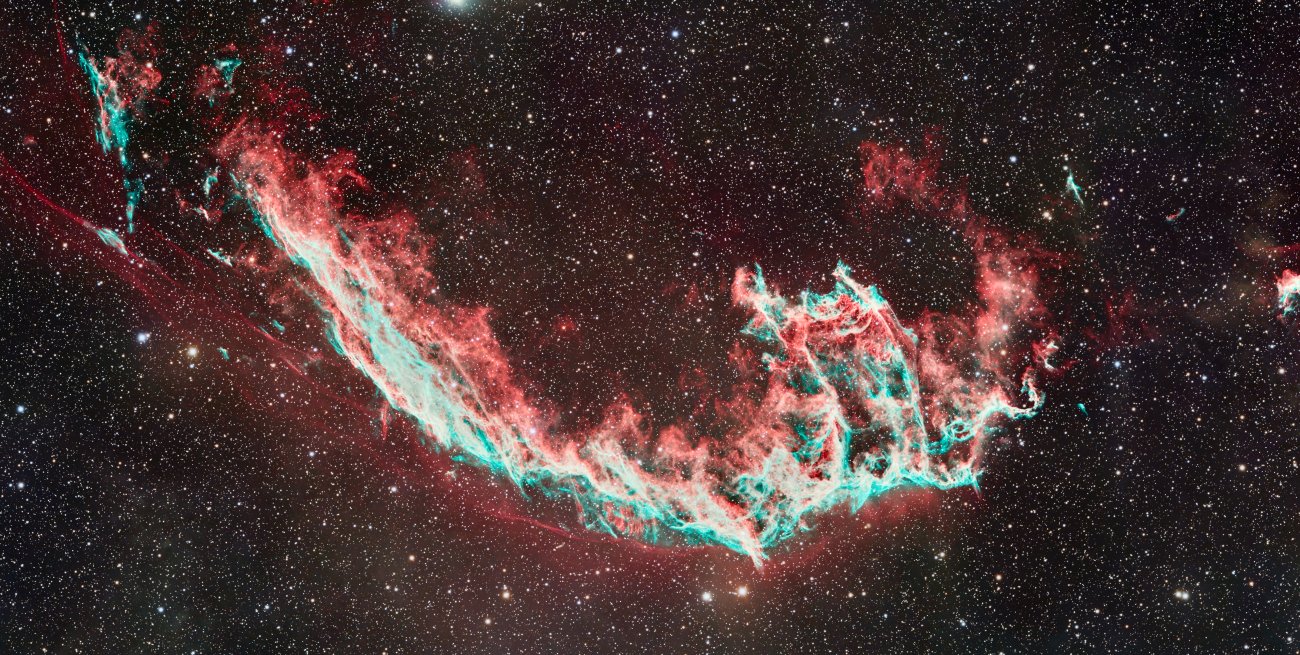
It is traditionally divided into three main parts: the Witch's Broom (NGC 6960), the Western Veil, which sweeps in front of the bright star 52 Cygni; Pickering's Triangle (NGC 6979), fainter, in the centre; and the Eastern Veil (NGC 6992-6995), the brightest of all.
Technical details
- Location :
- Rockwood, Texas, USA (Starfront Observatories)
- Date :
- 20-22/08/2025-15-17/10/2025
- Celestial Coordinates :
- RA: 20h 51m 50s
Dec: +30° 34' 59" - Acquisition :
- 342 x 120s (rgb) + 63 x 600 (HaO3) (11h24)
- Calibration :
- Offsets + Flats
- Mount :
- ZWO AM5
- Optics :
- Celestron Rasa 8
- Camera :
- Asi2600Mc Pro
- Filter :
- IDAS NBZ II 2"
- Distance :
- 2400 light years
- Constellation :
- Cygnus