Seagull Nebula
Order a print From 189€
Or give this image as a gift
Gift idea · ArtBox Gift Edition
Open edition · gallery-quality print, ready to give. Wooden frame, matte finish, gift box. To hang or stand.
Finish : Matte
Description
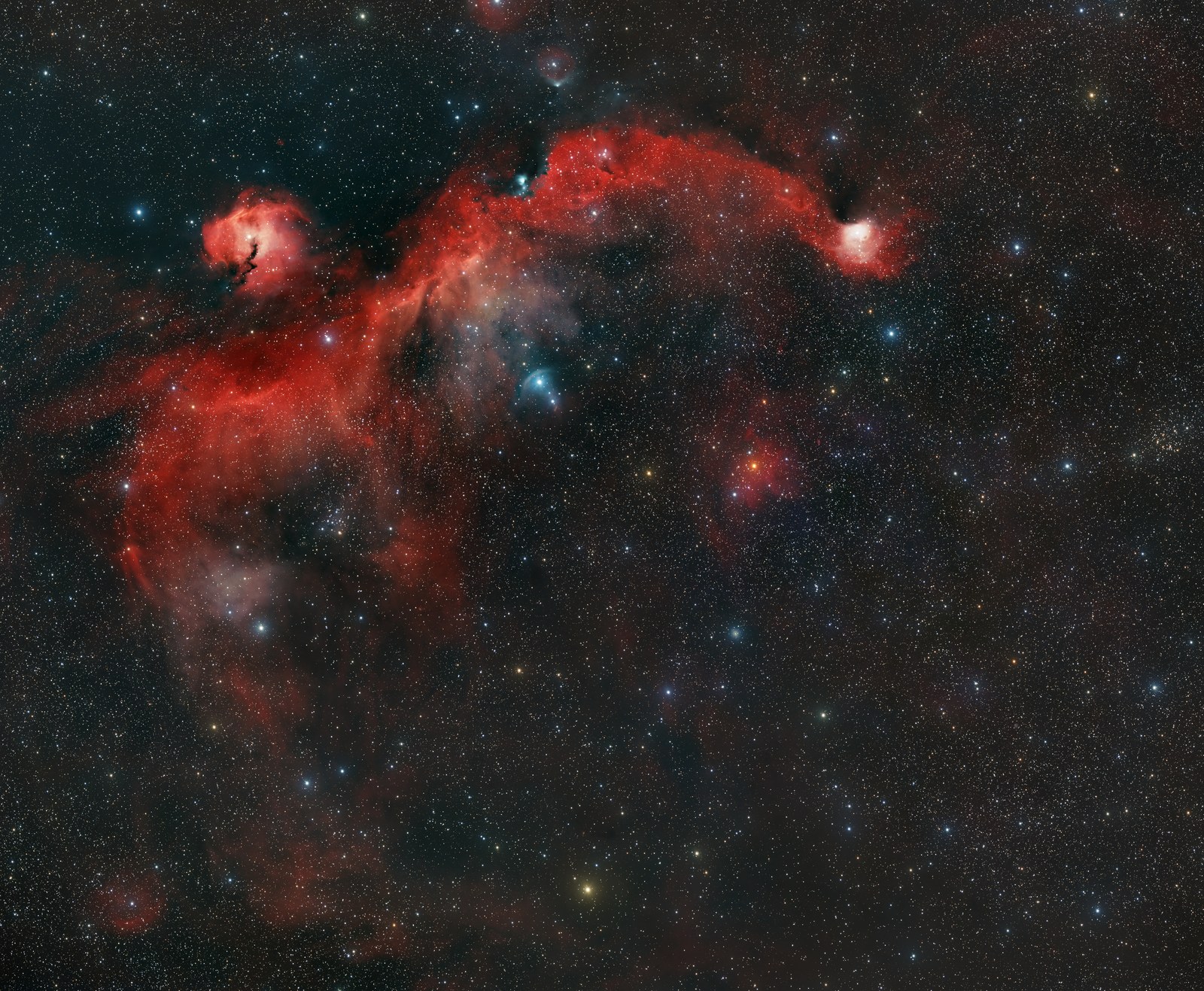
About 3,650 light-years away, in the constellation of Monoceros (the Unicorn), a cosmic bird spreads its wings in the dark. The Seagull Nebula is a vast cloud of gas and dust whose wingspan exceeds 100 light-years. Its hydrogen glows deep red, lit by the radiation of young massive stars born within it.
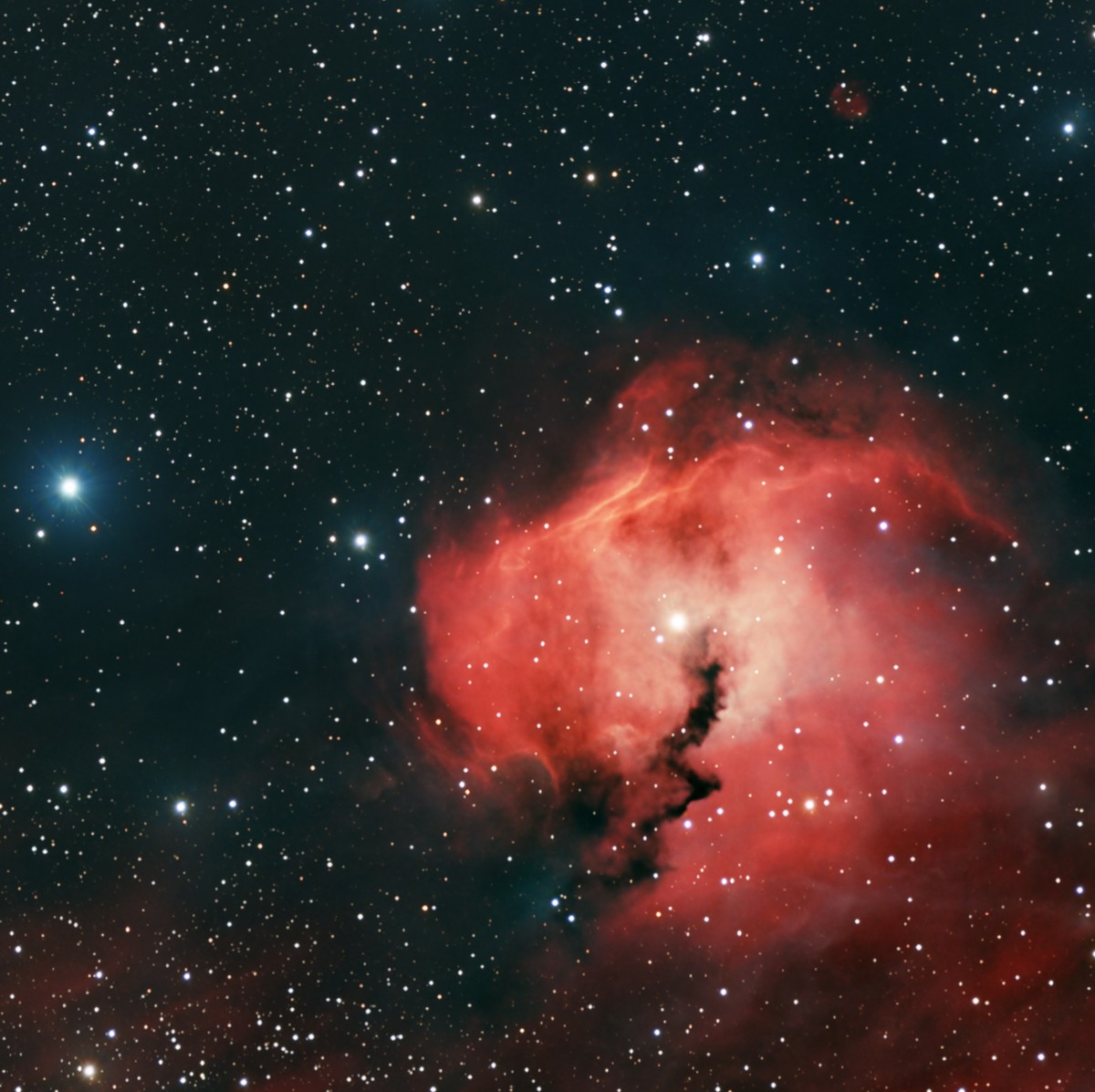
The bird's eye is a star: a young blue star, more than ten times heavier than the Sun and still forming. Its intense radiation ionises the gas around it and makes the whole seagull's head glow.
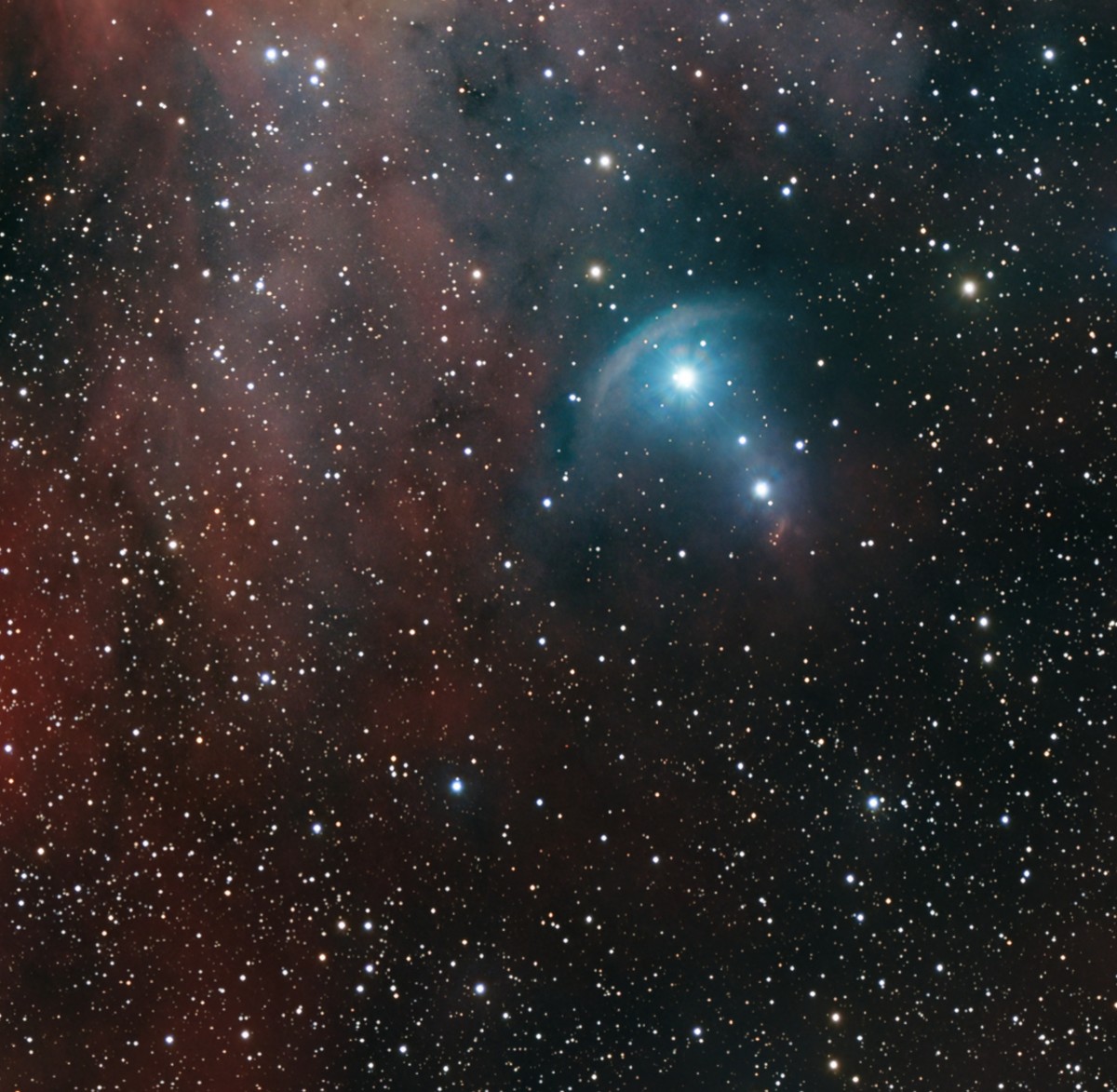
Toward the centre of the image, a brilliant blue star, FN Canis Majoris, is wrapped in a bluish arc. It is a runaway star: ejected at high speed, it races through the cloud and shoves the gas ahead of it, creating this shock wave, like the bow wave of a boat cutting through water. The Seagull is in fact only one part of a vast star-forming region dotted with young clusters.
This image gathers more than 22 hours of exposure from Texas, in natural colours enhanced by the light of hydrogen and oxygen, to reveal the full structure of the cloud.
Technical details
- Location :
- Rockwood, Texas, USA (Starfront Observatories)
- Date :
- 18-21-30/01/2026, 06-16-19/02/2026
- Celestial Coordinates :
- RA: 07h 08m 12s
Dec: -11° 26' 38" - Acquisition :
- RGB : 223 X 240s (14h52m) + HaOIII : 116 X 240s (7h44m) · Total : 22h36m
- Calibration :
- Offsets + Flats
- Mount :
- ZWO AM5
- Optics :
- Celestron Rasa 8
- Camera :
- ASI2600MC PRO
- Filter :
- Antlia V-Pro Luminance 2" (RGB) + IDAS NBZ-II 2" (HaOIII)
- Distance :
- 3650 light years
- Constellation :
- Monoceros