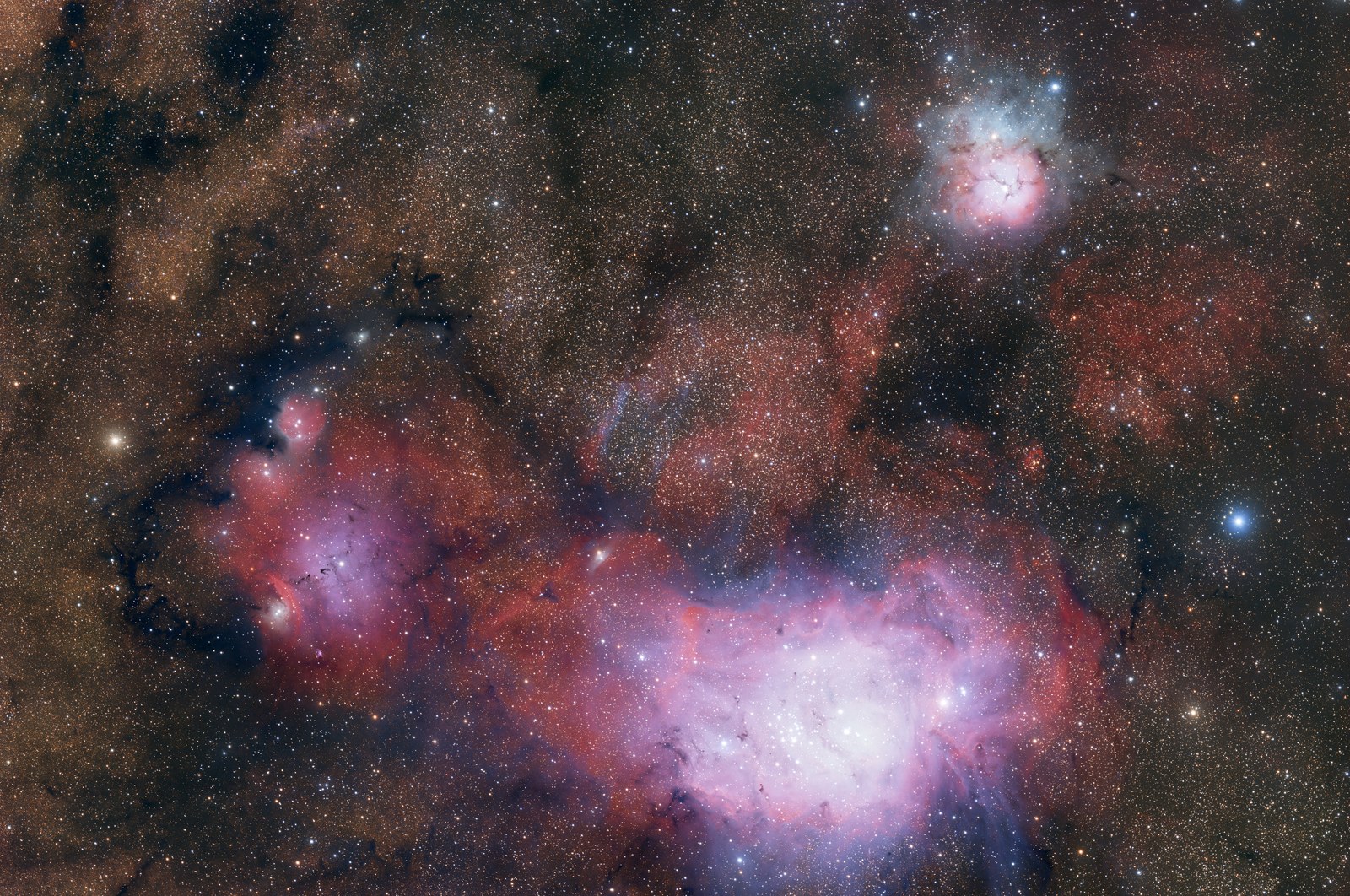
The Lagoon and Trifid Nebulae
Order a print From 219€
Or give this image as a gift
Gift idea · ArtBox Gift Edition
Open edition · gallery-quality print, ready to give. Wooden frame, matte finish, gift box. To hang or stand.
Finish : Matte
Description
Two of the most famous nebulae in Sagittarius, captured side by side: the Lagoon (M8) and the Trifid (M20). Close neighbours in the summer sky, they shine a few thousand light-years away, in a region where new stars are still being born.
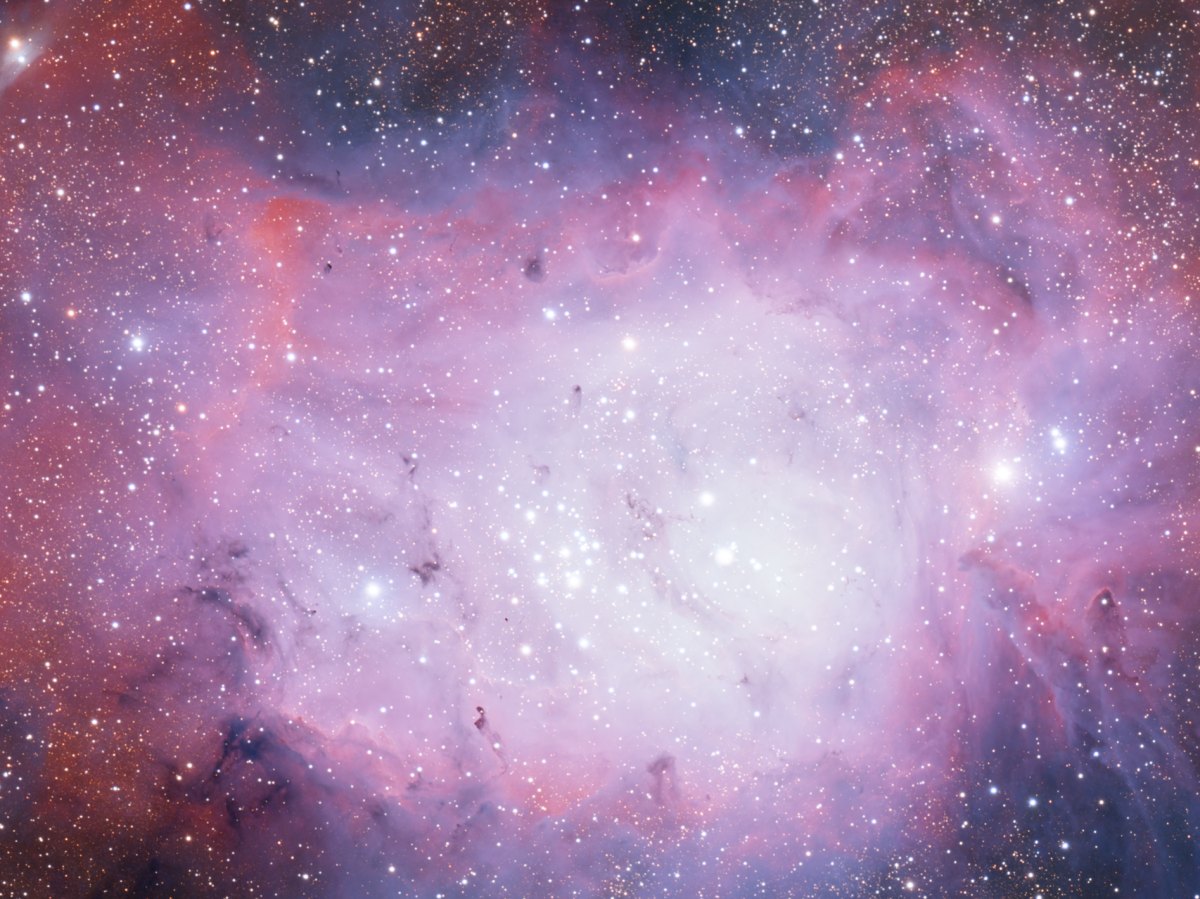
The Lagoon is a vast stellar nursery. Its hydrogen gas, lit by the radiation of young, very hot stars, stretches over 100 light-years and glows deep pink. At its heart sits a young star cluster (NGC 6530). About 4,100 light-years away, it is, along with the Orion Nebula, one of only two star-forming nebulae faintly visible to the naked eye from our latitudes.
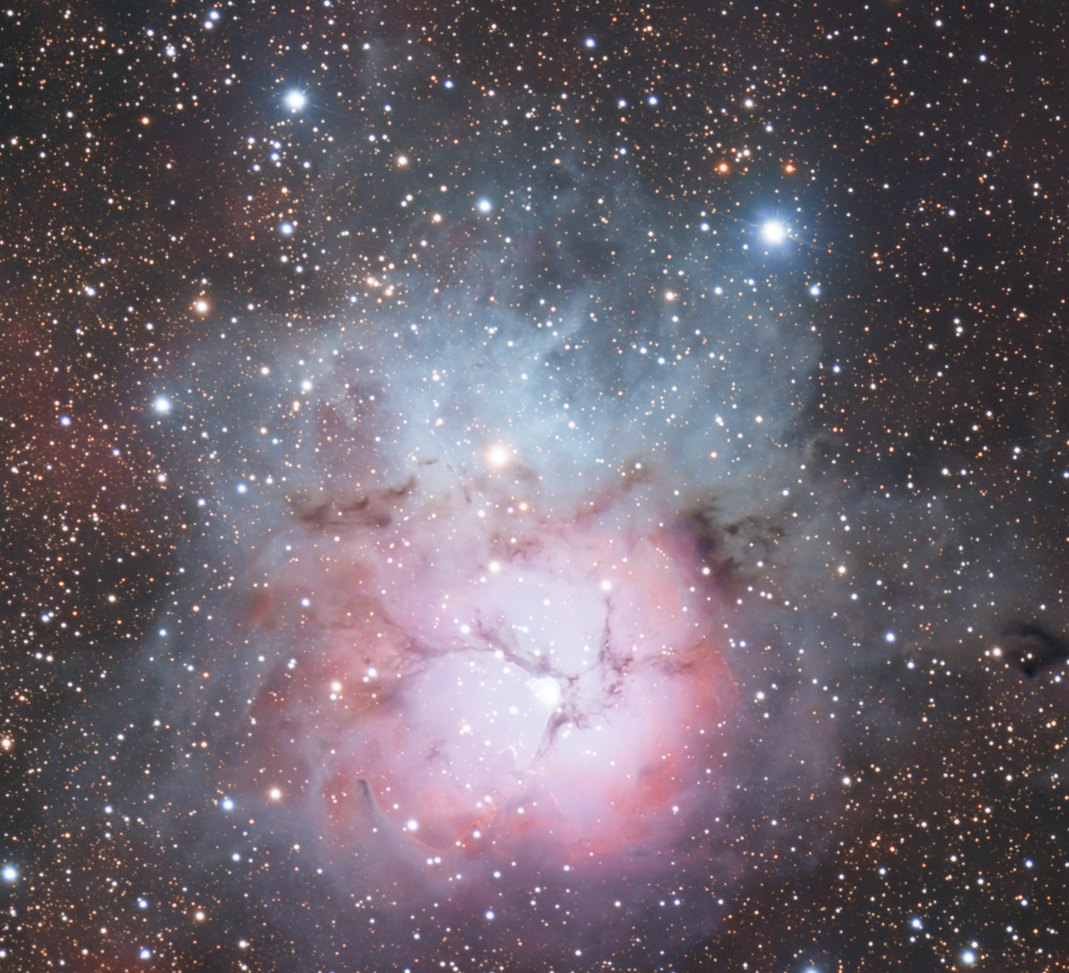
Higher in the frame, the Trifid combines three kinds of nebula in a single object: the pink of hydrogen emitting its own light, the blue of a dust cloud reflecting the glow of nearby stars, and dark dust lanes that split it into three lobes, which gave it its name.
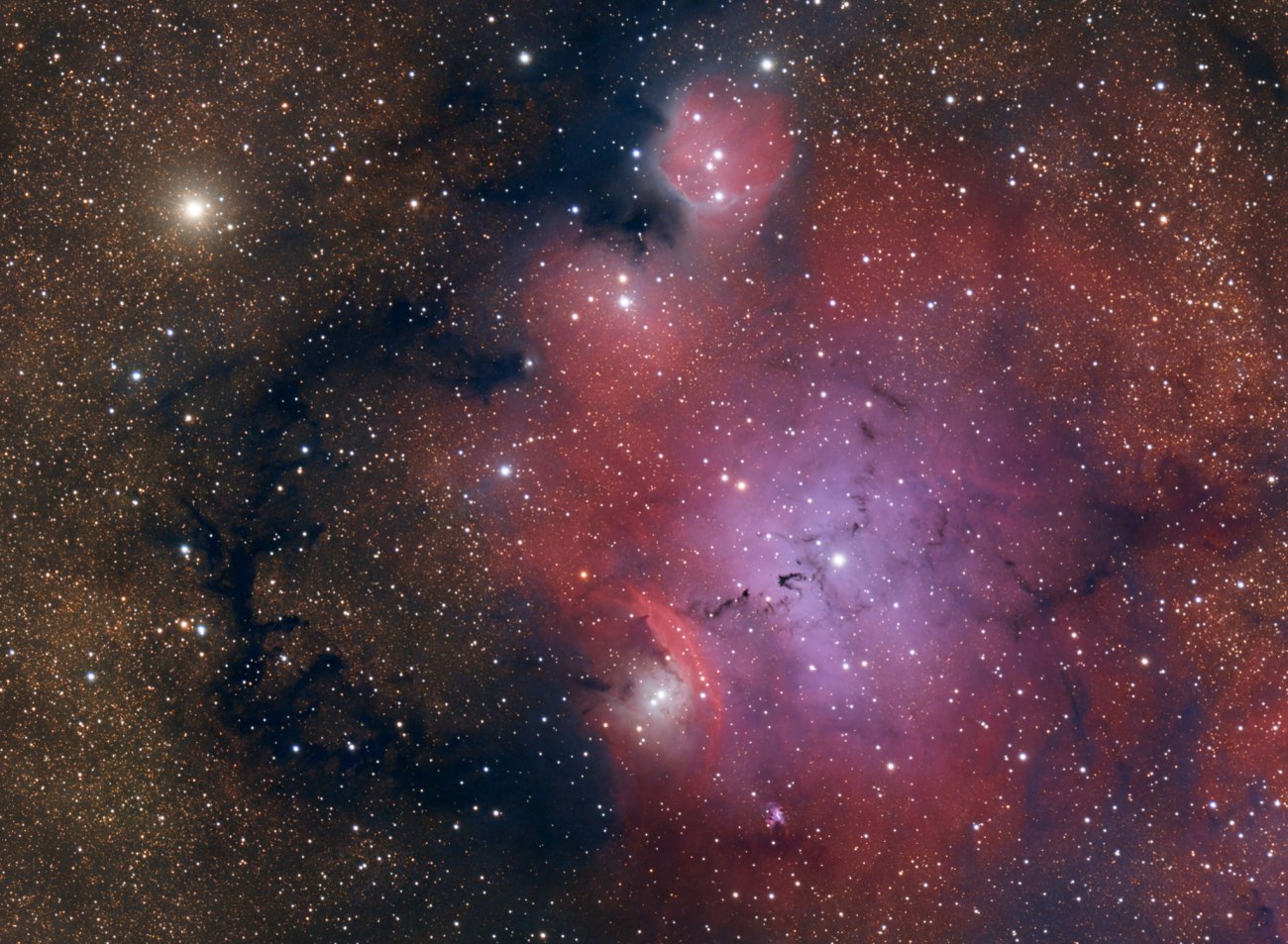
To the left of the Lagoon huddles a small archipelago of nebulae, IC 1274, IC 1275, IC 4685 and NGC 6559, all born from the same great cloud. Here again the three families come together: the pink of glowing hydrogen, the blue of dust reflecting the light of nearby stars, and dark veils that enfold them.
And tucked into one corner hides something far more discreet: W28, the remains of a star that exploded a few tens of thousands of years ago. Almost invisible, it appears here at the very edge of detection. The image gathers nearly 11 hours of exposure from Texas, in broadband light for natural colours and in narrowband (hydrogen and oxygen) to reveal the gas.
Technical details
- Location :
- Rockwood, Texas, USA (Starfront Observatories)
- Date :
- 17-19-20-21/06/2026
- Celestial Coordinates :
- RA : 18h 5m 48s
Dec : -23° 41′ 10″ - Acquisition :
- RGB : 112 x 180s (5h36m) + HaOIII : 105 x 180s (5h15m) · Total : 10h51m
- Calibration :
- Offsets + Flats
- Mount :
- ZWO AM5
- Optics :
- Celestron Rasa 8
- Camera :
- ZWO ASI2600MC PRO
- Filter :
- Antlia V-Pro Luminance 2" + IDAS NBZ-II
- Distance :
- 4100 (M8) / 5200 (M20) light years
- Constellation :
- Sagittarius